Primary Family Math Newsletter - December 2025 

Have you been loving our Math Family Newsletters?

We’d love to hear how they’ve been helping your family explore math in fun and meaningful ways!

Take our quick survey and share how you’ve been using the newsletter — and you’ll be entered for a chance to win an exciting Family Math Prize!

Take the survey now and join the fun!
Female teacher with multi-cultural elementary school students

Activities for December

Math Game: “I Spy”

How to play:

Using clues that involve location (e.g. "I spy something in front of the bookcase."). Other words you might use to describe relative location include above, below, on top, beside, between, near, under, and behind.

Source: Taken from Mathology, Grade 1, ‘Next Steps At Home’


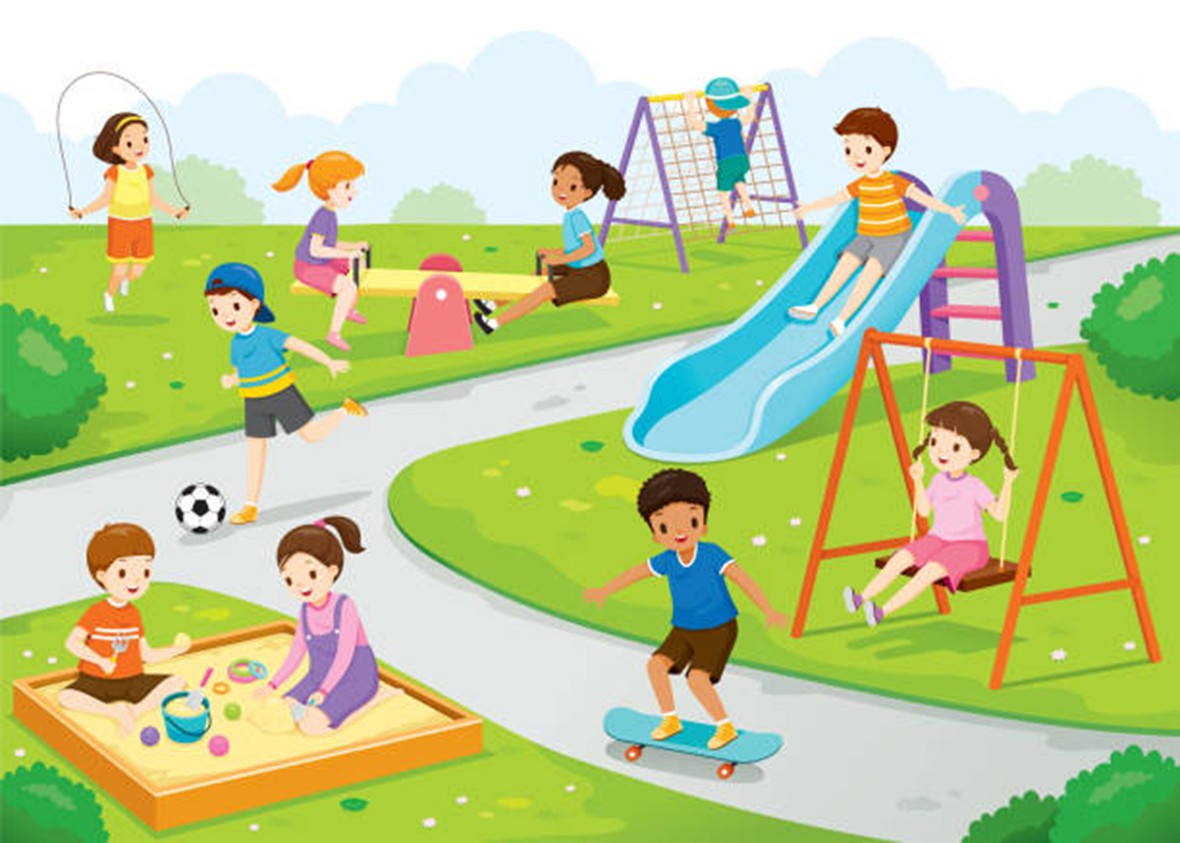
Math Talk: What do you notice? What do you wonder?

Students on a playground

Image Source: iStock by Getty Images


Parent Pro Tip: Encourage your child to use positional language to describe the relative locations of people in this image. 


Math Strategies: Early Addition

This is the second strategy in our series of featured math strategies. This month, we’re focusing on Using Doubles. Using doubles helps students understand addition because it builds on facts they already know, making new problems easier and less intimidating. Doubles act as anchor facts, allowing students to use patterns and relationships—like adjusting by one for near doubles. This approach promotes relational thinking, supports flexible mental strategies, and deepens conceptual understanding when paired with visual models, turning addition into a connected, meaningful process instead of memorization.
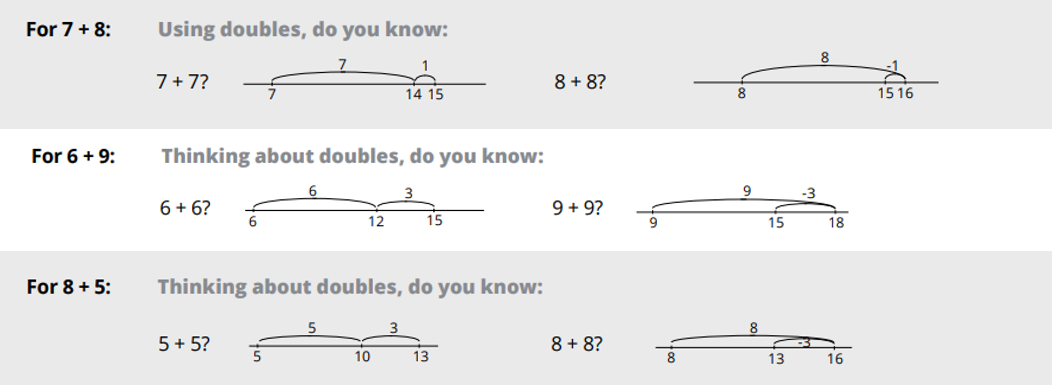
Using Doubles Example

Image Source: Math is FigureOutAble! The Most Important Numeracy Strategies, Pam Harris.

Try these questions at home using doubles:

4 + 6 = 

6 + 8 = 

7 + 9 = 

13 + 11 = 

16 + 14 =

Thinking Task

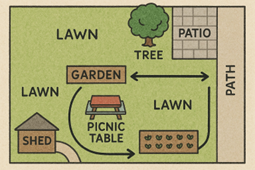
Draw a map of an outdoor space that you know well. Label the objects and areas in the space. Tell where your favourite object or area is compared to other points on your map. Then, pick two other areas on your map. Show how to get from one of those areas to the other by using arrows. 

Map


Where Math Meets Dance

Learn a simple dance – how could you represent the steps using positional language – words, symbols, shapes on paper for someone else to follow?

Example.

  1. Flap arms four times.
  2. Clap 4 times.
  3. Hop 3 times.
  4. Repeat steps 1 – 3, four times. 

1. Flap Arms 4 times 2. Clap 4 times 3. Hop 3 times 4. Repeat Steps 1 four times

With parent/guardian permission, children are invited to share the creative ways in which they have represented their dance steps and we will feature these in our next Family Math Newsletter!

Email us!


Parent Resources

  • Check out the Ontario Elementary Mathematics 2020 Curriculum Glossary! Positional Language
  • EQAO Math Night for Parents and Guardians (Grades 3, 6, and 9) Webinar: Monday, December 8, 2025 from 12:00pm – 1:00pm. Register at: EQAO


Looking for additional math resources?

Check out our past e-newsletters for more fun and exciting math games and challenges to do at home.

Family Math E-Newsletter 2025-26