Artificial Intelligence (AI) in Education

Grand Erie is taking a proactive stance to ensure the safe, effective and responsible use of Generative Artificial Intelligence (GenAI) in the classroom. AI offers new ways to support teachers and students by making learning experiences more personal, providing immediate feedback and improving accessibility. Our goal is to use GenAI tools to complement traditional learning methods and empower students with digital literacy skills and a strong understanding of how to use these technologies safely and ethically.

Grand Erie aims to provide educators with guidelines for the responsible use of GenAI and how to utilize AI tools safely and effectively, adhering to existing regulations regarding the acceptable use of information technology, privacy and information management, and Growing Success. Acknowledging both potential risks and benefits, this framework aims to guide sound decision-making to prevent harm.

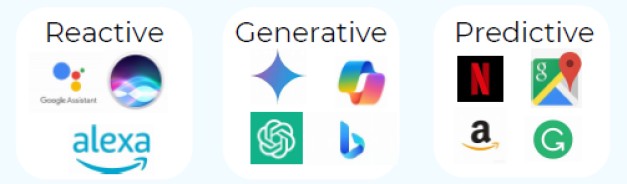
There are three types of Artificial Intelligence:

  • Reactive (e.g., virtual assistants [Siri, Alexa, Google Assistant])
  • Predictive (e.g., Netflix recommendations, Grammarly, predictive text, Google Maps)
  • Generative (e.g., ChatGPT, Copilot, Gemini)

The guidelines on this page outline our current understanding and best-use practices of Generative Artificial Intelligence.

As we navigate the advancement of GenAI, governments, educational institutions, organizations, businesses, and individuals alike are feeling the pressures of adjusting to rapidly changing technologies.

AI does not change our duty of care and our duty to educate. The Education Act has not been revised.


Artificial Intelligence in Education

Intention and Rationale

The purpose of this information is to provide an overview of K-12 educator use of Generative AI within Grand Erie. This page provides suggestions and considerations on how to use GenAI rooted in a human-centered approach to foster equity, inclusion, and belonging. We aim to empower and support educators to enhance their teaching practice through meaningful use.

GenAI represents a significant advancement in educational tools, offering teachers the ability to enhance learning experiences, personalize instruction, and improve educational outcomes. While it's natural to feel apprehensive about new technologies, GenAI is designed to augment, not replace, the human element in teaching. By automating routine tasks, it allows educators to devote more time for student interaction and individualized instruction. Embracing this technology is a step towards fostering a culture of innovation and preparing students for a future integrated with AI.
Artificial Intelligence

Artificial Intelligence (AI)

AI is like a smart computer that can think like a human. It can learn things, understand language, and make decisions. In school, AI can help make learning more fun and easy for you. 

3 Types of AI

Generative AI (GenAI)

GenAI is a type of AI that can create new things like stories, pictures, and music. It's like a magic tool that can help teachers grade your homework or give you a personalized learning experience. But, we still need people to check its work because it can sometimes make mistakes. 

GenAI uses something called Large Language Models (LLMs). These are like big brains for computers that help them understand and use language just like we do. They learn from lots of books and articles and can to many other tasks.

In school, both AI and GenAI can help teachers and students. They can make learning more personal, help grade tests, and create new learning materials. But, we need to use them thoughtfully and ethically. 


What is AI and GenAI?

Artificial Intelligence (AI) encompasses technologies that enable computers to simulate human intelligence. It includes machine learning, natural language processing, and deep learning. AI automates tasks, enhances productivity, and informs decision-making. In education, AI offers personalized

Generative AI (GenAI) takes AI further by creating new content based on existing artifacts. It generates text, images, music, and more. GenAI has applications in content creation, automated grading, and personalized learning. However, human validation remains crucial due to potential inaccuracies or biases in generated artifacts.

GenAI tools have been trained on Large Language Models (LLMs). LLMs are powerful language models designed to understand and generate natural language. Through extensive training on vast amounts of text data, they learn intricate language patterns. These models, often based on transformer architectures, consist of billions of parameters, enabling them to perform various language-related tasks.

In practical applications, LLMs serve as the backbone for chatbots, virtual assistants, content generation, research assistance, and language translation. They have become accessible through interfaces like OpenAI’s Chat GPT-3 and GPT-4, Micorsoft’s Copilot, Google’s Gemini, Magic School, Canva, DALL-E, Midjourney, Adobe Firefly, Khanmigo, and countless others.

LLMs represent a significant breakthrough in natural language processing (NLP) and artificial intelligence. As they continue to evolve, they are poised to reshape how we interact with technology and access information, making them a pivotal part of the modern digital landscape.

In educational settings, both AI and GenAI benefit educators and students. They enable personalized learning, streamline assessments, and enhance content creation. Thoughtful implementation and ethical considerations are essential for maximizing their potential.

To maximize the significant benefits AI can offer in education, both teachers and students must possess a foundational knowledge of how these models function. LLMs are distinct from search engines. A different approach for effective outcomes is essential.
What is AI’s Role in Education?

Artificial Intelligence (AI) is rapidly becoming a transformative force in education, offering a range of benefits that can significantly enhance teaching and learning. By personalizing learning experiences, AI can analyze individual needs and allow educators to customize their instruction, ensuring that each student's unique learning requirements are met. Interactive tools and immediate feedback mechanisms engage learners more deeply, fostering creativity and improving educational outcomes.

Efficient data analysis is another key advantage, with AI providing educators with actionable insights that can inform teaching strategies and student support. Accessibility improvements are also notable; AI-powered tools such as read-aloud, dictation, translation, and captioning are making education more inclusive and equitable.

Moreover, AI's ability to generate custom educational content — from lesson plans to quizzes and rubrics — in any language and for any level, is a game-changer, allowing for a more tailored and scalable approach to curriculum development.

The roles of AI in education, as outlined by Ouynag and Jiao (2021), range from directing cognitive learning (AI-Directed), supporting learners as they collaborate with AI (AI- Supported), to empowering learners to lead the interaction (AI-Empowered). As AI continues to evolve, it's crucial for educators to stay informed and prepared, equipping learners with the necessary skills to leverage AI tools effectively and responsibly, ensuring that all students have the opportunity to benefit from these advanced resources. The integration of AI in education is not just about the technology itself, but about fostering a learning environment where both educators and students can thrive.

Safety, Security, and Privacy Considerations

It is crucial that safety, security, and privacy are prioritized when educators and students use GenAI tools. Grand Erie adheres to Ontario’s Municipal Freedom of Information and Protection of Privacy Act (MFIPPA), which directs the Board’s privacy protection practices. Some tools may not comply with the safety and privacy standards set by governance, oversight bodies, or Grand Erie’s existing policies.

This includes terms of use, data collection, consent, and the use and sharing of information entered into the tool. Privacy rights are implicated when handling personally identifying information, which is defined as any data that can identify an individual, such as a name, student number, or even an IP address. Depending on the tool, submitted information may be used for further training and shared with other users, potentially leading to privacy breaches, misuse, and misinformation (CyberArk Centre of Excellence, 2023).

Guiding Principles

Do no harm:

All integration of AI in education must be in accordance with the policy and Information Technology standards that are set forth in Board and Provincial policies. This includes ensuring the safeguarding of the privacy, security, and confidentiality of personally identifiable information, ensuring that algorithms are not based on inherent biases that lead to discriminatory outcomes, and that AI is only allowed when its use has the potential to contribute positively and improve to the status quo.

Prioritize integrity:

A core purpose of education is the development of responsible, ethical, and engaged citizens. Therefore, part of the integration of AI in education must be to teach about morality, ethics, honour, cheating, and how artificial intelligence can lead to perverse and destructive outcomes for individuals, relationships, and communities.

Augment, not replace humans:

AI cannot and should not ever replace human judgement. Although synthesis and analysis of information can be expedited through AI, it will never replace teachers who provide wisdom, context, feedback, empathy, nurturing and humanity in ways that a machine cannot. It also should not overpower/over-ride the critical thinking, judgement, and morality of the learner.

Harness AI to empower student success:

AI presents transformative opportunities to enrich instruction and enable more adaptive, personalized learning. To fully leverage these benefits, we must embrace an outlook of innovation and experimentation, while ensuring access for all learners. Rather than just digitizing traditional practices, we can reimagine education to nurture each student’s unlimited potential with the assistive power of AI. Our vision should focus on possibility with AI as a gateway to expand human capacity, not conformity to conventions of the past.

Work in partnership:

AI researchers and experts in Ontario universities and employers are key partners and guides around building the skills and knowledge required to be successful in the new economy. This includes how to think about evolving AI systems and the practices needed to use them responsibly.

Be constantly discerning and responsive to the continuous expansion of AI capabilities and uses:

This is not a one-and-done. The guidelines, best practices, and tools available will constantly need to be revisited to keep pace with the changes brought by the exponential growth of AI and technology advancements in our world. Nimbleness and urgency, balanced with careful considerations, will be critical to ensuring we are as prepared for the continuous change ahead in education.

Responsible Use of AI Tools

Grand Erie recognizes that responsible uses of AI will vary depending on the context, such as a classroom activity or assignment. Teachers will clarify if, when, and how AI tools will be used, with input from students and families, while the school system will ensure compliance with applicable laws and regulations regarding data security and privacy. Appropriate AI use should be guided by the specific parameters and objectives defined for an activity.

Below are some examples of responsible uses that serve educational goals.

Student Support
  • Aiding Creativity: Students can harness generative AI to spark creativity across diverse subjects, including writing, visual arts, and music composition.
  • Collaboration: Generative AI tools can partner with students in group projects by contributing concepts, supplying research support, and identifying relationships between varied information.
  • Communication: AI can offer students real-time translation, personalized language exercises, and interactive dialogue simulations.
  • Content Creation and Enhancement: AI can help generate personalized study materials, summaries, quizzes, and visual aids, help students organize thoughts and content, and help review content.
  • Tutoring: AI technologies have the potential to democratize one-to-one tutoring and support, making personalized learning more accessible to a broader range of students. AI-powered virtual teaching assistants may provide non-stop support, answer questions, help with homework, and supplement classroom instruction.
Teacher Support
  • Assessment Design and Analysis: In addition to enhancing assessment design by creating questions and providing standardized feedback on common mistakes, AI can conduct diagnostic assessments to identify gaps in knowledge or skills and enable rich performance assessments. Teachers will ultimately be responsible for evaluation, feedback, and grading, including determining and assessing the usefulness of AI in supporting their grading work. AI will not be solely responsible for grading.
  • Content Development and Enhancement for Differentiation: AI can assist educators by differentiating curricula, suggesting lesson plans, generating diagrams and charts, and customizing independent practice based on student needs and proficiency levels.
  • Continuous Professional Development: AI can guide educators by recommending teaching and learning strategies based on student needs, personalizing professional development to teachers’ needs and interests, suggesting collaborative projects between subjects or teachers, and offering simulation-based training scenarios such as teaching a lesson or managing a parent/teacher conference.
  • Research and Resource Compilation: AI can help educators by recommending books or articles relevant to a lesson and updating teachers on teaching techniques, research, and methods.

Pedagogy

Bloom's Taxonomy provides an ideal lens through which educators can integrate Generative AI tools into their teaching methodologies.

Explore Bloom's Taxonomy Levels:

Knowledge:

Gathering and recall AI can be used to streamline the process of gathering and recalling factual information. Educators can guide students in using AI to quickly retrieve data, identify key concepts, or find examples that reinforce course material.

Comprehension:

Understanding and interpretation AI tools can assist in summarizing texts, translating languages, or even explaining complex ideas in simpler terms. This can help students in not just understanding but also interpreting subject matter more effectively.

Application:

Practical use of knowledge AI's potential in applying learned concepts in practical scenarios is immense. Whether it's using AI simulations for scientific experiments or applying mathematical concepts in coding, these tools can provide hands-on experience in a controlled, virtual environment.

Analysis:

Dissecting and questioning with AI, students can learn to analyze data, recognize patterns, and critically assess information. AI tools can help in breaking down complex problems and can be particularly useful in subjects like data science and statistics.

Synthesis:

Integration and creation AI can be a powerful ally in creative endeavours. From data visualization to creating film from text, AI tools can help students in synthesizing information and presenting that information in creative ways.

Evaluation:

Critical thinking and judgment, AI can be used to teach students about bias in data, the importance of ethical considerations, and the limitations of AI itself. It encourages critical thinking and fosters a deeper understanding of the technology’s impact on society. They can also use AI tools for feedback and improving their own work using that feedback.

From “Moving from Learning to Use AI to Using AI for Learning: Bloom's Taxonomy for Utilising Generative AI Tools” by Stephanie Holt, Director of Learning and Teaching at DSB Mumbai

AI & Mitigating Bias

As educators use AI to create lessons and resources, use AI in lessons and teach about AI to students, educators must consider how to mitigate bias in the material that is created. Below is a list of meaningful ways to mitigate bias courtesy of Angela Stockman’s The English Teacher's Guide to AI.

Explore ways to mitigate bias:
  • Explicit Instruction: Begin with teaching students about AI bias, so they can recognize, and report biased outputs or suggestions.
  • Diverse Data Sets: If students are working with datasets, ensure they use diverse and representative samples for any AI tasks, including textual analyses.
  • Multiple AI Tools: Encourage students to use multiple AI tools and compare results, helping them identify any consistent biases.
  • Peer Reviews: Encourage peer review sessions where students can discuss the AI-generated feedback they received, comparing and contrasting different perspectives.
  • Critical Thinking: Stress the importance of not accepting AI suggestions at face value. Students should question and understand AI recommendations, especially in areas like grammar or style suggestions.
  • Transparency in Assignment: Clearly specify when and how students can use AI tools, and what limitations or precautions they should observe.
  • Bias Detection Exercises: Design classroom activities where students deliberately feed diverse content into AI tools to spot potential biases or shortcomings.
  • Feedback Channels: Establish a clear channel where students can report biases they encounter while using AI tools, fostering a feedback-driven classroom environment.
  • Collaborative Exploration: Organize group activities where students collectively explore AI outputs, allowing for a broader analysis of potential biases.
  • Ethical Use Discussions: Host discussions on the ethical implications of AI, including biases, helping students understand the broader societal implications.
  • Continuous Updates: Stay updated on the latest research on AI biases, especially as they pertain to language and literature, and integrate findings into classroom discussions and practices.
  • Contextual Analysis: Encourage students to consider the cultural, historical, and social context of texts when evaluating AI-generated analyses or feedback, ensuring a holistic understanding.
  • External Expertise: Invite AI experts or scholars who focus on AI ethics to talk to students, offering a deeper understanding of the current challenges and solutions.
  • Critical Analysis of Tools: Regularly review the AI tools being used in the classroom for any reported biases and consider switching to more equitable alternatives when available.
  • Iterative Process: Reinforce that AI is a tool and not an absolute authority. Encourage students to iterate their work based on a combination of AI feedback, personal reflection, and human input.

Guidelines for Ethical Use of AI Tools

Explore the guidelines:
  • Transparency: Always disclose when and how AI was used in the creation of an assignment or project.
  • Original Thought: Use AI as a supplement, not a replacement, ensuring your work primarily represents your own ideas and understanding.
  • Respect Copyright: Do not input copyrighted texts or materials into AI systems without proper authorization.
  • Privacy: Avoid entering personal information or that of classmates into AI tools, especially without consent.
  • Consent: Always get permission before using another student’s work in conjunction with AI, even if it's just for analysis or improvement suggestions.
  • Critical Thinking: Scrutinize suggestions or outputs from AI. Don't accept them blindly; they aren't always correct or the best choice.
  • Understanding Over Dependency: Instead of relying solely on AI for corrections, strive to understand the rationale behind the suggestions.
  • Limit Plagiarism: Use AI tools ethically to check for unintentional plagiarism, but never to rewrite or "spin" content to bypass plagiarism detectors.
  • Avoid Misrepresentation: Don't use AI to falsely enhance or modify your capabilities, such as faking a certain reading level or vocabulary.
  • Respect Classroom Policies: Always adhere to class, school and board guidelines/procedures concerning AI use, even if you disagree or find them restrictive.
  • Feedback Loop: If using AI for iterative feedback, ensure that the tool is not merely reinforcing its own biases or errors.
  • Cultural Sensitivity: Be wary of AI biases. If using AI for content suggestions, be critical and avoid perpetuating stereotypes or misinformation.
  • Stay Updated: AI tools evolve quickly. Regularly check if the tools you're using have been updated or if their terms of use have changed.
  • Share and Educate: If you find valuable insights or ethical concerns about an AI tool, share with classmates and teachers to foster collective learning.
  • Ethical Tool Selection: Opt for AI tools that are transparent about their data usage policies and are committed to ethical practices.

Courtesy of Angela Stockman, The English Teacher's Guide to AI

Using AI Responsibly EVERY Time

Source: AI for Education & Vera Cubero 2023

Evaluate: Evaluate the initial output to see if it meets the intended purpose and your needs.


Verify: Verify the facts, figures, quotes and data using reliable sources to ensure there are no hallucinations or bias.


Edit: Edit your prompt and ask follow up questions to have the AI improve its output.


Revise: Revise to reflect your unique needs, style, and/or tone. AI is a great starting point, but shouldn't be the final product.


You: You are responsible for everything you create with AI. Always be transparent about how you've used these tools.


Sources

  1. How to Use AI Responsibly EVERY Time Infographic (n.d.). AI for Education
  2. Mormando, Samuel (November 9, 2023). “Creating AI Usage Guidelines for Students” Edutopia
  3. North Carolina Department of Public Instruction (NCDPI). “North Carolina Generative AI Implementation Recommendations and Considerations for PK-13 Public Schools.” 16 January 2024
  4. Ouyang, F., & Jiao, P. (2021). Artificial intelligence in education: The three paradigms. Computers and Education: Artificial Intelligence, 2, Article#100020.
  5. Stockman, Angela. (2024). The English Teacher’s Guide to AI is licensed under CC BY-NC 4.0
  6. Trust, Tory Ph.D., (2024) "AI & Ethics" slide deck. Licensed under CC BY NC 4..0 UNESCO. (2023). Guidance for GenAI in education and research (No. 6945). In F. Miao & W. Holmes (Eds.). ISBN 978-92-3-100612-8.
  7. Waterloo Catholic District School Board. “WCDSB Guidelines for responsible Educator Use of Gen AI.” 2024.