Primary Family Math Newsletter - September 2026

Activities for September

Problem Solving: Shape Building Investigation

You have 10 sticks, stones, or other safe natural objects.

  • What different shapes can you create?
  • Which shapes have corners?
  • Which shapes have straight sides?
  • How can you prove that your shapes are different? 

Nature Math Challenge

Go for a walk or visit your favourite place in nature. Invite your child to look for shapes in the world around them. 

Can they spot shapes such as triangles, squares, rectangles, circles, or prisms? They can also create shapes using natural materials, such as sticks, stones, leaves, or pinecones. 

Try asking:

  • What shapes do you notice?
  • How do you know it is a triangle, rectangle, or another shape?
  • “Can you use these sticks or stones to make a different shape?
  • What is the same or different about the shapes you found or made?

This activity supports children in noticing, describing, comparing, and creating shapes. The important part is not finding every shape; it is talking about what they notice and explaining their thinking.

Adapted from: The Robertson Program

Math Talk

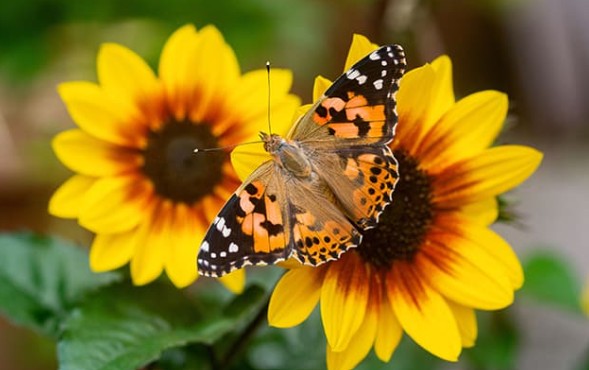
Monarch butterly sitting on flower

Image Source: National Geographic Kids 

Take a moment to look closely together at the image above and ask,  

  • What do you notice?  
  • What do you wonder?  
  • How could we use math to explore our ideas? 

Primary Math Strands and Connections to Nature

Primary students use math to notice and describe the world around them. They may count, sort, compare, measure, and look for patterns in nature. Primary students may explore the following strands through nature:

  • Number: counting and comparing natural objects; noticing quantities in groups.
  • Algebra: identifying, describing, extending, and creating patterns, such as patterns in leaves, petals, pinecones, or animal tracks.
  • Data: sorting and organizing observations, then representing what they find.
  • Spatial Sense: describing shapes, locations, movement, and measurements in the world around them.

Resources for Families

  • Interested in learning more about the Ontario Mathematics Curriculum?  A Parents Guide to Mathematics Grades 1-8 (2020) details the content, structure, strands, and summaries of expectations in the Ontario Math Curriculum for parents.  

  • TVOkids (Ages 2-8): Educational videos, games, and digital content that help young learners build foundational skills through engaging, curriculum-connected experiences. You can explore “ by topic,” here and select “Mathematics,” for math specific activities.  

Looking for additional math resources?

Check out our past e-newsletters for more fun and exciting math games and challenges to do at home.

Family Math E-Newsletters