Primary Family Math Newsletter - November 2026

Activities for November

Our Graduate Profile represents a shared vision for the knowledge, skills, and attributes learners need to lead and contribute in an evolving world. Math in the Kitchen supports this vision by developing creative and critical thinkers who notice patterns, analyze information, test ideas, and use mathematics to make and explain practical decisions.

In this edition, we are asking families to explore Math in the Kitchen! Math in the kitchen begins with noticing and wondering. Children can count, compare, sort, estimate, and describe while helping with everyday food preparation.

Problem Solving: Kitchen Shape Hunt

Look around your kitchen together for everyday objects that have familiar shapes. You might notice circles, squares, rectangles, or triangles in items such as plates, lids, napkins, placemats, cupboards, or containers. 

Ask your child:

  • "What shape do you see?"
  • "How do you know?"
  • "How many sides and corners does it have?"
  • "Can you find another object with the same shape?"

Please choose safe, easy-to-handle objects, or use picture of kitchen items.

Adapted from: Illustrative Mathematics, Grade 1 Geometry Task


Math Talk: Would You Rather?
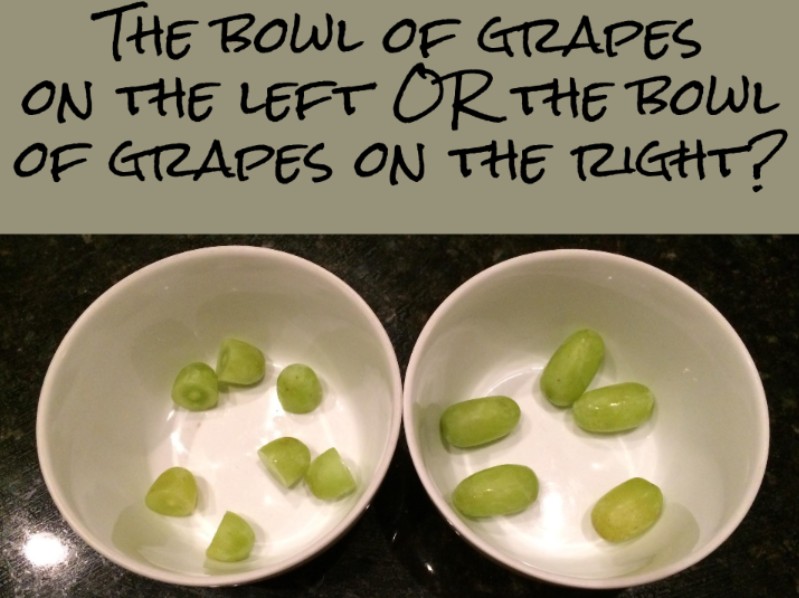
Two bowls where left bowl contains 3.5 grapes cut in half and the right bowl contains 5 whole grapes

  • Look at both bowls in the image above.
  • Choose which bowl you would rather have.
  • Convince me: Explain your reasoning and/or show your thinking.

Source: Would You Rather Math
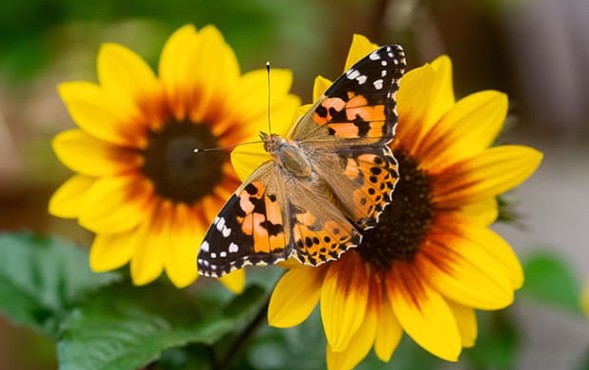

Math Talk

Monarch butterly sitting on flower

Image Source: National Geographic Kids 

Take a moment to look closely together at the image above and ask,  

  • What do you notice?  
  • What do you wonder?  
  • How could we use math to explore our ideas? 

Primary Math Strands and Connections to Math in the Kitchen

Strand B: Number

Curriculum Connection

Across Grades 1-3, students build number sense and use numbers and operations to solve everyday problems.

Simple Kitchen Connection

"We need 8 strawberries but have 5. How many more do we need?"

Strand C: Algebra

Curriculum Connection

Students recognize, describe, extend, and create patterns in real-life contexts. 

Simple Kitchen Connection

"Set the table in a pattern: fork, spoon, fork, spoon. What comes next?"

Strand D: Data

Curriculum Connection

Students collect, organize, represent, and interpret data in meaningful contexts. 

Simple Kitchen Connection

"Which fruit should we include in lunches this week?" 

Family members vote for different foods (e.g. apples, bananas, berries, or oranges). Your child can make a tally chart or picture graph and explains which choice was most popular.

Strand E: Spatial Sense

Curriculum Connection

Students compare, estimate, and determine measurements, and describe shapes and spatial relationships. 

Simple Kitchen Connection

"Which container will hold more?" 

Before pouring, ask children to predict whether a mug, bowl, or measuring cup holds more water. Compare the amounts using the same small cup as a non-standard unit. 

Purposeful Practice

Food Number Stories

Two plates of fruit have 9 strawberries altogether. 

  • How many strawberries could be on each plate?

Three bowls have 13 crackers altogether.

  • How many crackers could be in each bowl?

There are many answers. Ask your child:

  • How did you decide?
  • Can you find a different way?
  • How can you check that the total is correct?

Adapted from: Sullivan, P., & Lilburn, P. (2002). Good questions for math teaching: Why ask them and what to ask, K–6. Oxford University Press. 


Resources for Families

  • Families can use TVO Kids Homework Zone as a short, child-friendly homework support by watching a relevant video together, pausing to discuss the strategy, and inviting your child to explain what they notice. 
  • Families can use TVO Mathify to connect with free online math tutoring, ask questions about a current math problem, and talk through a strategy with a tutor. You will need your child’s OEN number to register, which can be found on their Progress Report/Report Cards. 

Looking for additional math resources?

Check out our past e-newsletters for more fun and exciting math games and challenges to do at home.

Family Math E-Newsletters