
Junior Family Math Newsletter - November 2026

Activities for November

Our Graduate Profile represents a shared vision for the knowledge, skills, and attributes learners need to lead and contribute in an evolving world. Math in the Kitchen supports this vision by developing creative and critical thinkers who notice patterns, analyze information, test ideas, and use mathematics to make and explain practical decisions.

In this edition, we are asking families to explore Math in the Kitchen! In the Junior division, kitchen routines offer meaningful ways to explore fractions, decimals, measurement, data, algebraic thinking, and financial choices.  

Problem Solving

Jessica and some friends have ordered two pizzas. One is a medium sized pizza while the other is a large.
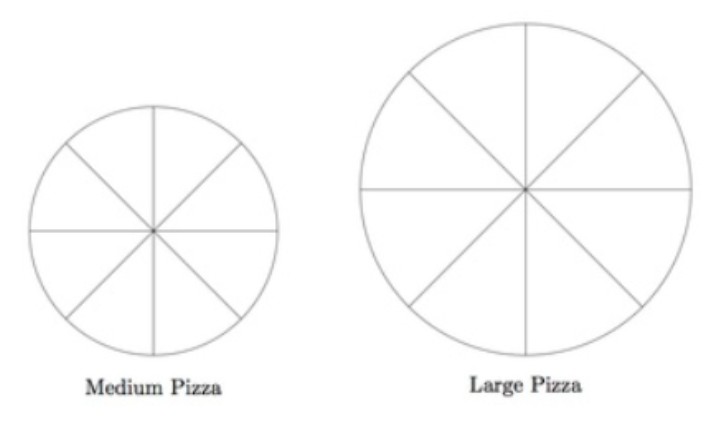
Medium Pizza vs Large Pizza

Jessica eats two slices of the medium sized pizza.

Has Jessica eaten 2/16 of the two pizzas? Explain your reasoning and draw a picture to illustrate your explanation.

Source: Illustrative Mathematics
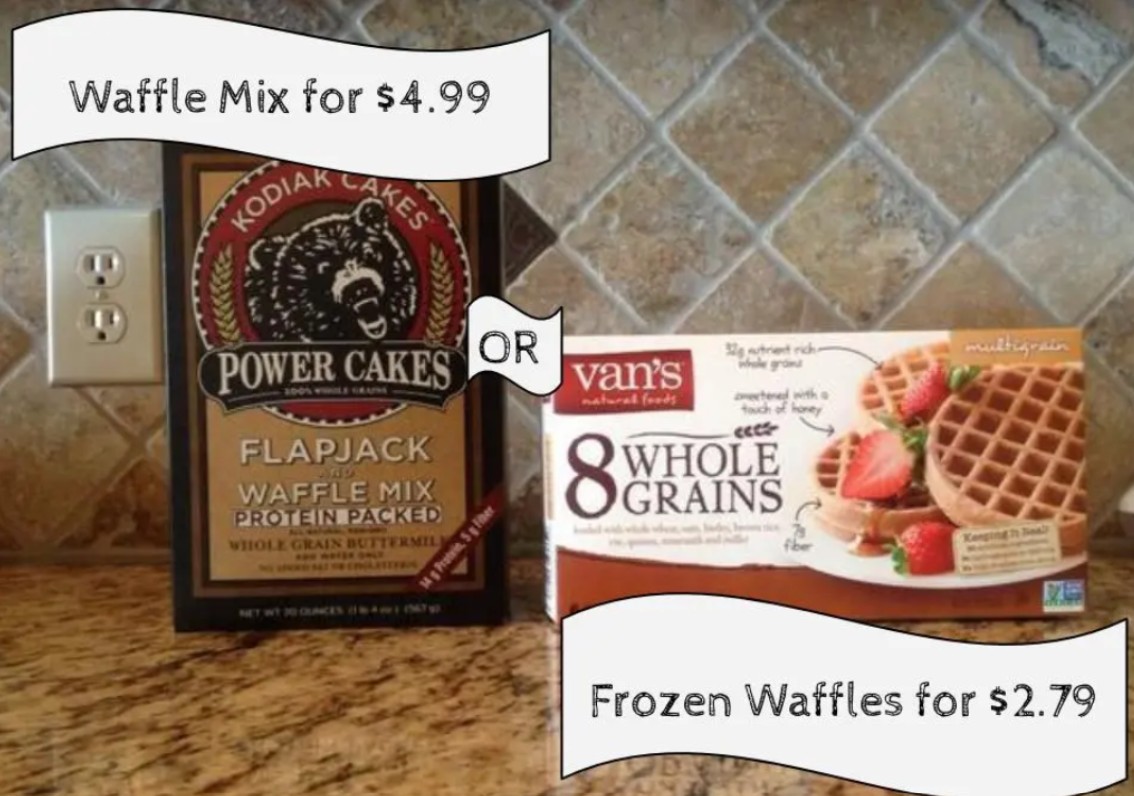

Math Talk: Would You Rather?

Would you rather: Waffle mix that costs $4.99 or box of frozen waffles for $2.79

  • Look at the image above and examine both choices. 
  • Choose the one you would rather have.
  • Convince me: Explain your reasoning and/or show your thinking.

Junior Math Strands and Connections to Math in the Kitchen

Strand B: Number

Curriculum Connections

Students deepen their understanding of whole numbers, fractions, decimals, and operations, and use them to solve everyday problems. 

Simple Kitchen Connection

Recipe scaling: When a recipe needs to serve more or fewer people, students use proportional reasoning to decide how each ingredient amount must change.

For example, a recipe serves 4, but the family needs 6 servings.

How can you determine how much of each ingredient you need?

Strand C: Algebra

Curriculum Connections

Students work with patterns, variables, expressions, equalities, and mathematical modelling in real-life situations. 

Simple Kitchen Connection

Recipe rule: Each smoothie needs 1 banana and 2 cups of milk.

If "n" represents the number of smoothies, students can describe the relationship with: 2n (cups of milk). 

They can test the rule with 3, 4, or 5 smoothies.

Strand D: Data

Curriculum Connections

Students collect, organize, analyze, and use data to make informed decisions. 

Simple Kitchen Connection

Food-waste investigation: For one week, estimate or measure discarded food, organize the results in a table or graph and identify one realistic action that could reduce waste. 

Strand E: Spatial Sense

Curriculum Connections

Students compare, estimate, and determine measurements in various contexts. 

Simple Kitchen Connection

Capacity and mass: Predict whether a 1L pitcher will fill four 250mL cups. 

Then test the prediction.

Older students can convert between units or calculate the amount needed for a larger group.

Strand F: Financial Literacy

Curriculum Connections

Students develop the knowledge and skills needed to make informed financial decisions. 

Simple Kitchen Connection

Best-buy comparison: Compare two packages of the same food.

A 750g package costs $4.50 and a 1kg package costs $5.40.

Which has a lower cost per 100g?

Discuss whether lower unit price is the only factor that matters. 

Purposeful Practice

Resources for Families

  • Families can use TVO Kids Homework Zone as a short, child-friendly homework support by watching a relevant video together, pausing to discuss the strategy, and inviting your child to explain what they notice. 

  • Families can use TVO Mathify to connect with free online math tutoring, ask questions about a current math problem, and talk through a strategy with a tutor. You will need your child’s OEN number to register, which can be found on their Progress Report/Report Cards. 

  • November is Financial Literacy Month! Check out this resource to support these conversations at home: Le Centre Franco 

Looking for additional math resources?

Check out our past e-newsletters for more fun and exciting math games and challenges to do at home.

Family Math E-Newsletters