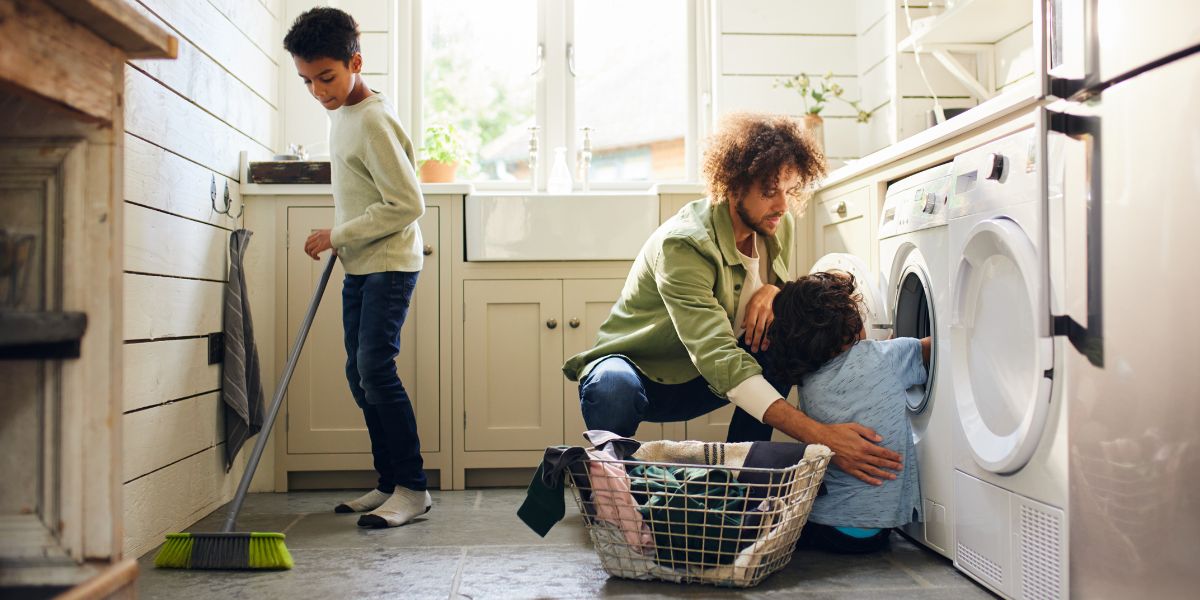
At home, families often do small jobs that take a bit of time. Choose one simple task that can be repeated, such as:
- putting away a basket of clean socks
- carrying groceries from the car to the door, one item at a time
- filling a pet’s food bowl scoop by scoop
- moving toys into a bin, one at a time
The Challenge
Different family members try the same task while someone else keeps track of how long it takes.
Families can choose how they measure time (unit):
- seconds or minutes
- counting heartbeats
- claps, steps, or foot stomps
- swings of a kitchen timer pendulum or metronome app
Each attempt should use the same unit within the family, but different families (or different tries) might use different units.
After completing the challenge, reflect on the following questions:
- Who finished faster? How do you know?
- What exactly are we counting, and why does that matter?
- What would happen if two people used different units?
- Which units were easier or harder to use? Why?
- Would the same person always be the fastest? What could change that?
Extension:
- How would another family measure this same task?
- What unit would be best if we wanted to compare results with others?
- If we repeated this tomorrow, what might stay the same and what might change?
Source: Adapted from the E2.4 Measurement Sample Task in Grade 2



-and-8-30-time-(right).jpg?sfvrsn=f4cdb7f8_1 "Two analog clocks showing 8 (left) and 8:30 time (right)")