Junior Family Math Newsletter - April 2026

Have you been loving our Math Family Newsletters?

We’d love to hear how they’ve been helping your family explore math in fun and meaningful ways!

Take our quick survey and share how you’ve been using the newsletter — and you’ll be entered for a chance to win an exciting Family Math Prize!

Take the survey now and join the fun!
Children doing math on a whiteboard

Activities for April

Math Talk: Time and Angles

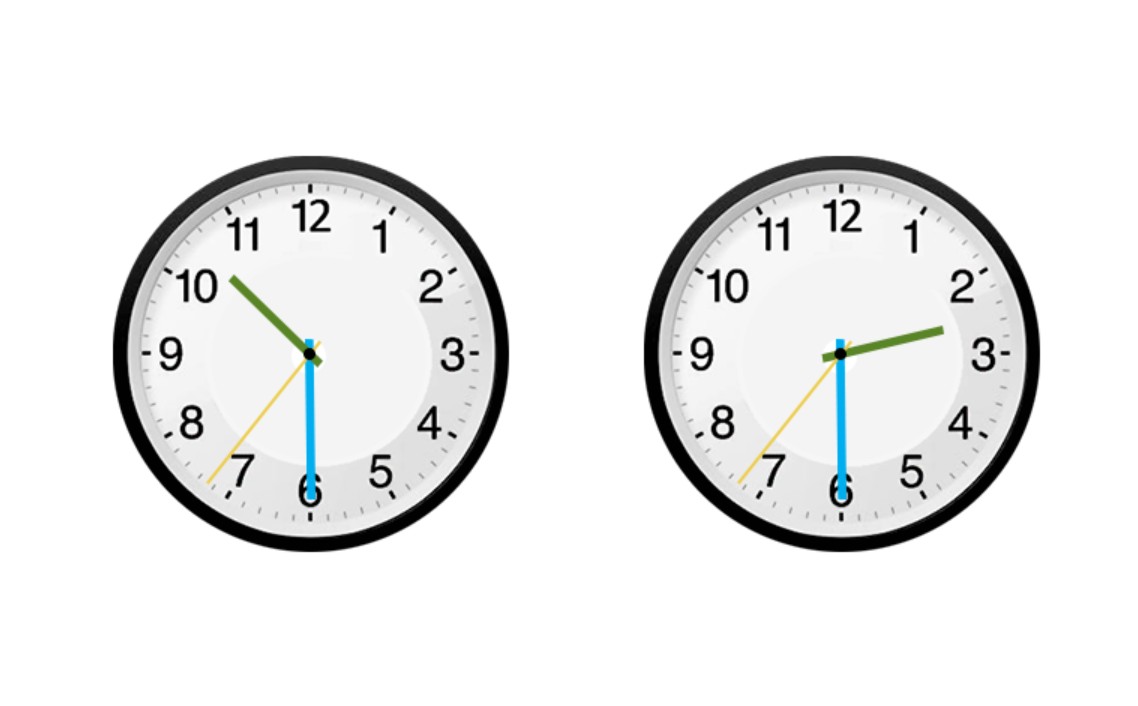
Take a look at the two clocks. They both show the same amount of time passing, but the clock hands look different. This is a chance to talk together about time and angles, using something we see every day.

What do you notice?

  • What do you notice about the time shown on each clock?
  • What do you notice about the angles made by the clock hands?

What do you wonder?

  • What do you wonder about how both clocks can show the same amount of time?
  • What do you wonder about which angle is bigger or smaller?
  • What do you wonder would change if more time passed?

Two graphic analog clocks - left showing ten thirty - right showing two thirty

Source: Same But Different Math


Family Math Challenge: Angle Scavenger Hunt at Home

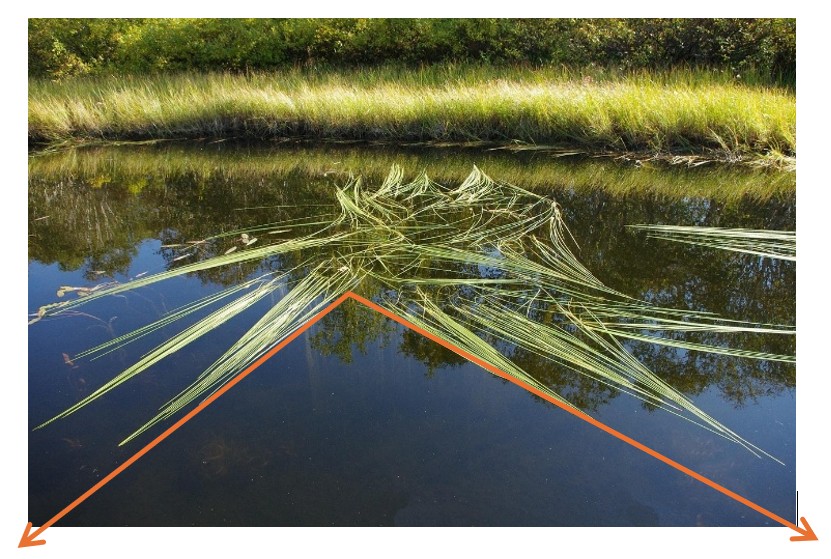
Try an angle scavenger hunt around your home or neighbourhood! Together, look for different types of angles you can spot in everyday places: on doors, windows, stairs, furniture, playground equipment, or street signs. Children can point them out, draw them, or take photos to share what they found.

As you explore, talk about how angles show up all around us and how some angles are smaller, bigger, or just right. This activity builds strong math thinking by encouraging children to observe, compare, and explain what they see in the world around them.

Try this at home:

  • Can you find a right angle?
  • Can you find an angle that is smaller than a right angle (acute)?
  • Can you find an angle that is larger than a right angle (obtuse)?

No measuring tools needed—just careful looking and good conversation!

Long blades of grass in pond with orange arrows demonstrating angle example

Digital Math Game: Angles Jigsaw Project

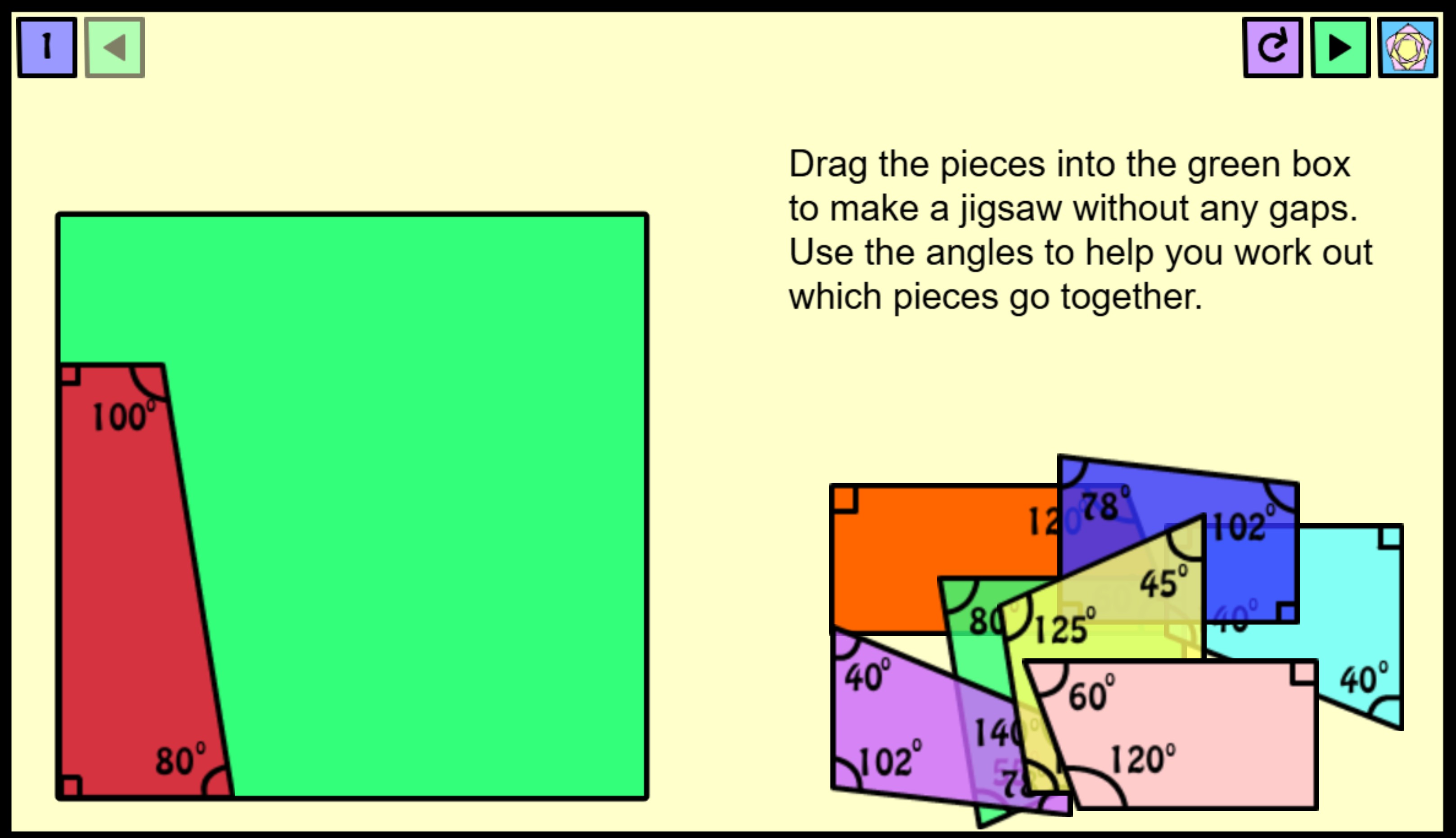
In this activity, students explore angles by fitting puzzle pieces together like a jigsaw. Each piece has angles that must connect in just the right way, encouraging children to look closely, compare angles, and think about how angles fit together. As students work, they begin to notice which angles are bigger or smaller and how angles combine around a point or along a straight line, all through hands‑on problem solving and discussion.

This activity helps build strong angle sense before students begin measuring with tools, and it’s a great reminder that math often starts with noticing, wondering, and trying things out.

Play Angles Jigsaw Project

Angles Jigsaw Project game start screen

Source: Angles Jigsaw Project


Family Math Moment: Creating Art with Angles

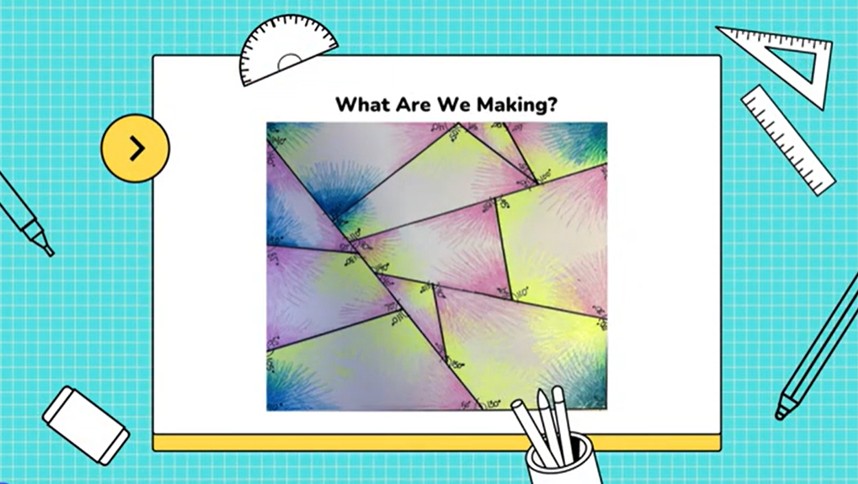
Try making geometric art at home using angles! With paper and a ruler, children can design creative pictures made from straight lines and different angles. Some families may choose to use a protractor to measure angles more precisely, but it is not required; careful looking, estimating, and talking about angles are just as valuable.

As children create, encourage them to notice how small, medium, and wide angles change the look of their artwork. This activity helps children see how math and art connect, while building confidence with angles in a fun, creative way.

Want to see a way that angles and protractors can be used in art? Families can watch this short video together for inspiration. 

Graphic of paper collage with abstract shapes taped together to illustrate dynamic angles

Source: Abstract Angles Review (Mrs. Boley's Art Room)


Math Strategies

This is the fourth strategy in our series of featured math strategies. This month, we’re focusing on the Area Model to multiply.

The area model helps students see multiplication as finding the total area of a rectangle by breaking it into smaller, more manageable parts. By partitioning numbers into tens and ones, students can make sense of multiplication across a variety of situations, such as equal groups, comparisons, combinations, and area problems.

For example, when solving a problem like 24 × 38, students might break the rectangle into parts (20 × 30, 20 × 8, 4 × 30, and 4 × 8), find each partial product, and then combine them. This same thinking supports real‑world problems, such as finding the total number of plants in equal rows, comparing quantities that scale up, counting possible outfit combinations, or determining the area of a rectangular space like a garden or orchard.

The area model also builds a strong bridge to the traditional multiplication algorithm. By visually connecting each partial product in the model to the steps in the algorithm, students develop a deeper understanding of why the algorithm works, not just how to use it. This strategy strengthens conceptual understanding, supports flexible thinking, and helps students approach multiplication with confidence and meaning.
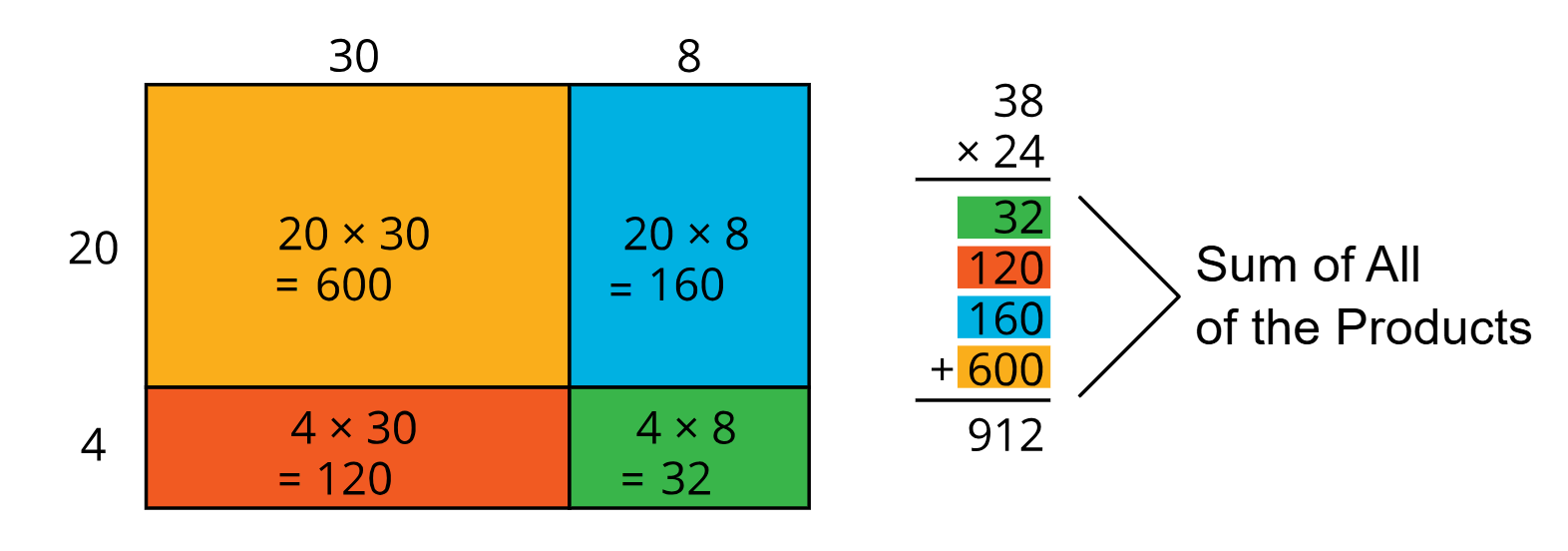
Area model and multiplication

Source: Ontario Mathematics Curriculum, 2020, Grade 5, B2.6 Operations Example


Math Riddle

Why was the obtuse angle always so frustrated? 

Math riddle

Click to reveal the answer

Because it was never right!


Parent Resources

  • EQAO Math Night for Parents and Guardians (Grades 3, 6, and 9) Webinar: Wednesday, April 1st, 2026 from 6:00pm – 7:00pm. Register at EQAO
  • EQAO Math Session for Parents/Guardians of Junior Students: Thursday, April 16th, 2026 from 12:00pm – 1:00pm. Register at EQAO
  • EQAO Webinar for Parents and Guardians of Elementary School Students: Wednesday, April 22nd, 2026, from 6:00pm – 7:00pm. Register at EQAO
  • EQAO Webinar for Parents and Guardians of Elementary School Students: Wednesday, April 29th, 2026, from 12:00pm – 1:00pm. Register at EQAO

Looking for additional math resources?

Check out our past e-newsletters for more fun and exciting math games and challenges to do at home.

Family Math E-Newsletter 2025-26